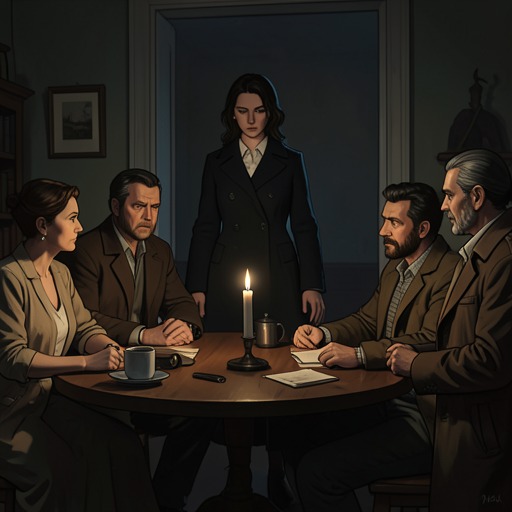
Grushenka’s struggle between resentment and forgiveness
The Brothers KaramazovGrushenka’s struggle between resentment and forgiveness is an inner conflict shaped by a five-year-old grievance and renewed when the man who wronged her returns. In confiding in Alyosha, she exposes how revenge, attachment, and the prospect of forgiveness have become entangled: her feelings for Dmitri have helped keep her from going back to the former lover, but they have not settled what she feels toward him. The scene makes forgiveness a difficult, unfinished choice rather than a simple release of anger.
The old grievance and its return
Five years earlier, after Kuzma brought her to the town, Grushenka shut herself away and lay awake crying, determined that she would pay the man back. She describes the resentment as private: other people do not see it, but at night she finds herself returning to the same anger and the same injured resolve. Its persistence makes the grievance more than a recollection; it remains an active part of how she understands herself.
A month before her confession, a letter arrived announcing that the man was coming. He was a widower and wanted to see her. Grushenka was shaken by the news and feared that, if he came and called to her, she would return to him as if beaten. That anticipated return alarms her: she is not sure whether it reflects love, weakness, or the power the old attachment still holds over her. Her anger with herself during the month of waiting becomes so intense that she says she is worse than she had been five years before.
Dmitri and the divided attachment
Grushenka tells Alyosha that she has played with Dmitri partly to stop herself from running to the returning man. The admission complicates her relationship with Dmitri: her attachment to him is bound up with an attempt to resist another attachment, and she does not present that resistance as a settled choice. She calls herself spiteful and vindictive, laying out a truth about her motives that she had not entrusted to everyone present.
Her confession is also carefully addressed. She calls Alyosha her sister, trusting him with a disclosure she frames as the whole truth, then warns Rakitin that the matter is not for him to judge. The contrast places Alyosha in the role of confidant and witness, while Grushenka insists on control over who may interpret her. She does not merely describe resentment; she speaks from within it and asks to be heard without turning the confession into an occasion for another person’s judgment.
Asking whether to forgive
As the expected meeting approaches, Grushenka recalls lying in the dark and asking her own heart whether she loved the man. She then gives the decision to Alyosha: she wants him to tell her whether she should forgive. His reply is gentle but definite. He says that she has already forgiven him.
Grushenka initially accepts the judgment, murmuring that she really has forgiven him and turning the answer against herself as evidence of her own abject heart. But the recognition does not close the matter. She soon qualifies it: perhaps she has not forgiven him after all; perhaps her heart is only getting ready to forgive. She will struggle with her heart, she tells Alyosha, and admits that over these five years she has grown to love her tears. Her final uncertainty is whether she loves the man or only the resentment itself.
An unfinished movement toward forgiveness
The scene gives the conflict a double shape. Grushenka’s resentment repeatedly returns in private, while the return of the man forces her to confront the possibility that she might go back to him. Alyosha’s declaration briefly names forgiveness as something already achieved, but Grushenka’s hesitation reopens the question and distinguishes a possible inward change from a completed decision. The movement is toward forgiveness, yet the evidence does not make that movement final or effortless.
By confessing to Alyosha, Grushenka turns a long-hidden cycle of anger and tears into something another person can hear. Her self-accusations are not a settled verdict on her character: they show her trying to understand the competing desires she has exposed. The unresolved ending matters. She recognizes the possibility of forgiving, but cannot be sure whether she has released her grievance or become attached to it.